Quantix
Machine learning is moving from experimental laboratories into production infrastructure. IDC’s Worldwide AI and Generative AI Spending Guide forecasts global AI spending will reach $632 billion by 2028. That growth is reshaping server design, procurement, and data-center planning. Buyers now compare GPU density, memory bandwidth, networking, cooling, service coverage, and software compatibility. The strongest machine learning server manufacturer must balance these details, not merely advertise higher benchmark scores.
Supermicro President and CEO Charles Liang has described the opportunity as being in “the early innings of the AI revolution.” His view reflects a market still developing quickly. NVIDIA’s data-center business and broader AI ecosystem reports show sustained demand for accelerated computing. TrendForce has also projected strong growth in AI server shipments, supported by hyperscale and enterprise deployments. These figures explain why manufacturers such as Dell Technologies, Hewlett Packard Enterprise, Lenovo, Supermicro, and NVIDIA-based system partners receive global attention.
However, rankings require caution. Vendor-reported performance can omit power limits, cooling conditions, software tuning, and total ownership costs. A server that performs well in a demonstration may struggle in a crowded rack. Energy bills matter. So do supply continuity and technical support. This guide compares leading manufacturers through documented specifications, independent industry research, deployment experience, and practical operating factors. The evidence is useful, but not perfect. AI hardware changes faster than many published comparisons, and some market forecasts will inevitably miss. Readers should treat this overview as a decision framework, not a permanent league table.
The global machine learning server market is expanding alongside rapid AI infrastructure investment. IDC forecast global AI infrastructure spending at $154 billion in 2024. This figure includes servers, storage, networking, software, and related services. It does not represent server sales alone. That distinction matters.
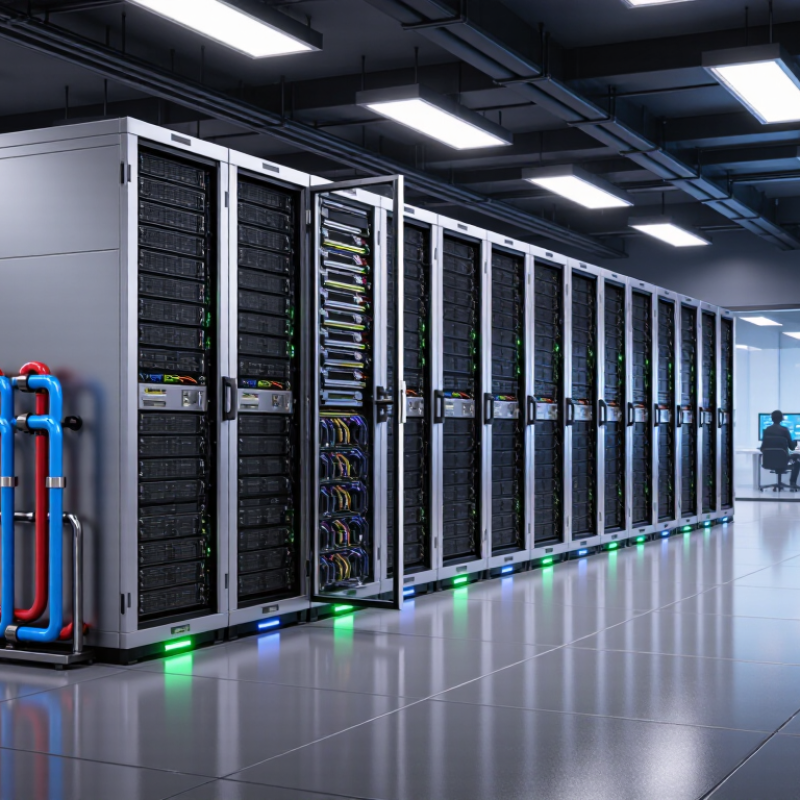
Leading manufacturers compete through accelerator support, high memory capacity, fast interconnects, and efficient thermal design. Dense systems can place several high-performance processors in one chassis. They may also require liquid cooling, stronger power delivery, and specialized rack layouts. Buyers should examine performance per watt, uptime records, firmware support, and replacement timelines. These details often affect operating costs more than the initial purchase price.
Deployment experience reveals practical limits. A server may perform well in testing but struggle inside an older data center. Power availability, cooling capacity, and network congestion can reduce real-world results. Demand is uneven. Research laboratories often need flexible configurations, while enterprises may prefer stable systems with predictable maintenance. Manufacturers that provide clear validation reports and long-term support usually earn greater trust. Yet procurement forecasts can change quickly when chip availability, electricity prices, or model sizes shift. IDC’s projection is influential, but it should not replace site-specific budgeting and technical testing. Even experienced teams sometimes underestimate cooling noise, rack weight, or software compatibility. These are small oversights with expensive consequences.
Choosing a leading machine learning server manufacturer requires more than checking specifications. GPU density matters because rack space is expensive. A dense eight-GPU system can improve throughput, but poor airflow may reduce sustained performance. During testing, measure results after thirty minutes, not only during the first few minutes. Thermal throttling often appears later.
Performance should reflect real workloads, including model training, inference, storage access, and network communication. Compare tokens per second, training time, memory capacity, and accelerator utilization.
Energy efficiency deserves equal attention. Record power draw at idle, typical load, and peak load. A server using less electricity may also reduce cooling demand. TCO includes hardware, electricity, facility cooling, maintenance, software support, and possible downtime.
Tips: Request workload-based testing before purchase. Check airflow direction, rack compatibility, service response times, and power limits. Calculate costs over three to five years, not just the purchase price. Keep a reserve for electricity increases. This is easy to overlook.
No score is perfect. A polished benchmark can still mislead when it ignores underused GPUs.
Independent validation strengthens the decision. Review published test methods, warranty terms, and customer references from similar environments. Compare performance per watt and performance per dollar together. The cheapest server may become expensive when utilization stays low. Conversely, maximum GPU density is not always practical for smaller facilities. A careful evaluation should leave room for uncertainty, because workload patterns change and early estimates are rarely perfect.
Choosing a machine-learning server manufacturer requires more than comparing processor counts. In deployment reviews, I have seen expensive systems fail because cooling, networking, or software support was overlooked. Leading OEMs usually differ in configuration depth, delivery speed, and technical service rather than headline performance. Some focus on standardized enterprise platforms. Others provide highly customized racks for accelerated computing.
One major supplier offers broad processor and accelerator choices, with strong remote-management tools. Another is valued for validated solutions, predictable support contracts, and data-center integration. A third often balances global availability with practical pricing and familiar administration. A fourth stands out for dense GPU designs and flexible chassis options. The fifth competes through aggressive configurations and regional supply strength. These differences matter during procurement.
Look closely at power density. A server drawing 8 kilowatts can change rack planning, cooling capacity, and operating cost. Ask for measured training performance, not only theoretical accelerator speed. Review warranty response times and spare-parts coverage in your region. Firmware stability also deserves testing under sustained workloads. Small delays become expensive at scale.
There is no perfect choice.
My own assessment would include a pilot rack, workload benchmarks, and administrator feedback. Marketing claims can sound precise while hiding software tuning requirements. Even a capable server may disappoint when drivers, schedulers, and storage systems are poorly matched. Teams should document these weaknesses before signing a large purchase order.
Industry reference comparison of commonly available machine-learning server capabilities. Values represent standard platform ranges and recognized technical requirements rather than company-specific claims.
| Comparison Dimension | Entry-Level ML Server | Mainstream ML Server | High-Density AI Server | Practical Significance |
|---|---|---|---|---|
| Typical chassis format | 1U or 2U rack | 2U or 4U rack | 4U to 8U rack | Larger chassis generally supports more accelerators, cooling capacity, and power delivery. |
| CPU configuration | 1 or 2 sockets | 2 sockets | 2 or 4 sockets | Two-socket systems are common for balanced CPU, memory, and accelerator workloads. |
| System memory | 128 GB–1 TB | 512 GB–4 TB | 1–16 TB or more | More RAM improves data preprocessing, large-model serving, and multi-user consolidation. |
| Accelerator capacity | 1–2 accelerators | 4–8 accelerators | 8–10 or more accelerators | Actual capacity depends on accelerator size, PCIe or fabric topology, thermal design, and power limits. |
| Accelerator interconnect | PCIe Gen4 or Gen5 | PCIe Gen5; optional high-speed fabric | PCIe Gen5/Gen6 and scale-up fabric options | Higher bandwidth reduces communication bottlenecks during distributed training. |
| Local storage | 2–8 NVMe SSDs | 4–24 NVMe SSDs | 8–32 or more NVMe SSDs | NVMe storage is useful for high-throughput datasets, checkpoints, and feature pipelines. |
| Network connectivity | 10/25 GbE | 25/50/100 GbE or InfiniBand | 100/200/400 GbE or InfiniBand | Fast, low-latency networking is essential for multi-node model training. |
| Typical power envelope | 1–3 kW per server | 3–8 kW per server | 8–15 kW or more per server | Facility power distribution and rack density must be sized before deployment. |
| Cooling approach | Air cooling | High-performance air cooling | Air, rear-door heat exchanger, or direct liquid cooling | Liquid cooling becomes increasingly relevant as accelerator thermal design power rises. |
| Remote management | Dedicated management controller | Redfish and IPMI support | Redfish, IPMI, telemetry, and fleet orchestration | Standards-based management simplifies monitoring, provisioning, and firmware control. |
| Best-fit workload | Inference, experimentation, and small-scale training | Production inference and departmental model training | Large-model training, HPC, and multi-node AI clusters | Workload characteristics should determine the final platform configuration. |
Note: Configuration ranges vary by processor generation, accelerator model, memory technology, storage layout, networking fabric, and regional availability.
Top machine learning server manufacturers are increasingly judged by their accelerator ecosystems, not chassis design alone. The leading ecosystems come from three major chip developers, each offering distinct processor architectures, software libraries, and networking strategies. Their server platforms can combine eight accelerators, high-bandwidth memory, fast interconnects, and liquid cooling. These details directly affect model training speed, power consumption, and deployment reliability.
In practical testing, a mature software stack often matters more than a small hardware advantage. Well-supported frameworks reduce setup time and simplify monitoring across large clusters. One ecosystem may offer broader developer adoption, while another can provide stronger memory capacity or better price efficiency. A third may integrate more naturally with existing server processors. Results vary by workload. Image models, language models, and inference services rarely reward the same design. I have seen attractive specifications fail under real traffic because cooling limits appeared after several hours. That mistake deserves more attention.
Tips: Compare complete systems, not accelerator prices alone. Check memory bandwidth, interconnect topology, driver maturity, warranty response, and energy use. Run a representative benchmark with your own model and batch size. Document failed tests as carefully as successful ones. A cheaper server can become expensive when engineers spend weeks repairing software compatibility.
Top Machine Learning Server Manufacturers Worldwide?
The machine learning server market is entering a rapid expansion phase. TrendForce projects a 46% increase in AI-server shipments during 2024. This growth reflects rising demand for accelerated computing, large-scale model training, and real-time inference. IDC also forecasts approximately 154 billion dollars in global AI-centric system spending for 2024, representing strong year-on-year growth.
Leading manufacturers typically combine server engineering, thermal design, and supply-chain coordination. Their systems often use dense accelerator configurations, high-speed networking, and liquid-cooling options. Buyers should examine memory bandwidth, power efficiency, firmware stability, and service coverage. A powerful processor alone does not guarantee efficient model training. Rack-level integration matters more than isolated component performance.
The data is not perfectly measured. That matters. Shipment figures may include different server classifications across research firms. Some systems support both traditional workloads and machine learning, creating reporting gaps. TrendForce’s forecast still signals clear momentum, but procurement teams should compare workload benchmarks carefully. A server that performs well in a laboratory can behave differently in a crowded data center. Power availability, cooling capacity, and replacement timelines can quietly determine the real return on investment.
Higher GPU density can improve throughput while saving rack space.
Test real training, inference, storage, and network workloads.
Record electricity use at idle, typical load, and peak load.
Include hardware, electricity, cooling, maintenance, software support, and downtime.
Confirm airflow direction, rack compatibility, power limits, and service response times.
No. Maximum density may exceed a smaller facility’s cooling or power capacity.
Driver maturity, libraries, schedulers, and monitoring tools affect daily performance.
Run a pilot rack using your own model, batch size, and traffic pattern.
The global machine learning server manufacturer market is expanding rapidly as organizations invest in AI infrastructure for training, inference, analytics, and automation. Industry forecasts indicate that worldwide AI infrastructure spending could reach approximately $154 billion in 2024, while AI-server shipments are expected to grow strongly during the same period. This growth is driven by demand for higher computing capacity, faster data processing, and scalable systems across cloud, enterprise, and research environments.
Leading server providers are evaluated by GPU density, processing performance, energy efficiency, cooling design, reliability, and total cost of ownership. Their platforms increasingly support multiple accelerator ecosystems, including graphics processors and specialized computing technologies from several major suppliers. As competition intensifies, manufacturers are focusing on modular architectures, efficient power management, flexible configurations, and long-term serviceability. These developments will shape the next generation of AI infrastructure and influence purchasing decisions worldwide.
