Choosing a deep learning server manufacturer is a practical decision, not merely a hardware purchase. Training workloads place sustained pressure on GPUs, memory, storage, cooling systems, and power delivery. A suitable manufacturer should understand these demands through real deployment experience.
As NVIDIA founder and CEO Jensen Huang has said, “The data center is the new computer.” This observation explains why server design matters so deeply. A reliable manufacturer can align GPU selection with model size, training frequency, data volume, and future expansion. It should also provide clear thermal specifications, validated components, firmware support, and responsive technical assistance. Small details matter. A poorly planned airflow path can reduce performance during long training runs. Slow replacement services can interrupt research schedules and increase operating costs.
Price still matters. It should not lead the decision. A cheaper server may create hidden expenses through higher energy use, limited upgrade options, or difficult maintenance. Buyers should request documented benchmarks, warranty terms, compatibility information, and references from comparable users. These checks support trustworthy evaluation. No manufacturer is perfect. Even experienced suppliers can misunderstand a workload or underestimate cooling requirements. That is why careful communication remains essential. The best deep learning server manufacturer acts as a long-term engineering partner, not simply a seller of racks and components. Its value appears when systems remain stable, serviceable, and ready for the next generation of models.
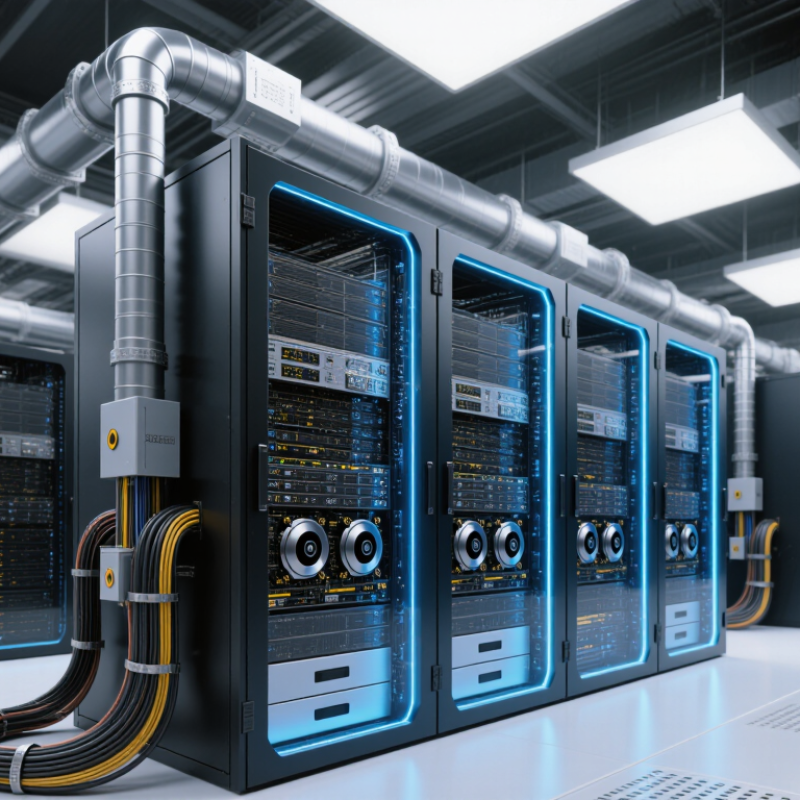
Defining Deep Learning Servers with NVIDIA H100’s 80 GB HBM3 Memory
Choosing a deep learning server manufacturer means examining more than processor specifications. The central question is memory behavior under real workloads. An 80 GB HBM3 accelerator offers high bandwidth and fast access for large models. It can support larger batches, longer sequences, or more parameters before using slower system memory. That difference appears during training, not only in a product sheet. Less data movement often means steadier utilization and shorter iteration cycles. Still, capacity is not performance by itself.
A capable manufacturer should design the server around the accelerator, rather than simply install it in a chassis. Cooling paths, power delivery, PCIe topology, and memory configuration all affect HBM3 efficiency. Engineers should monitor temperature, throttling, interconnect traffic, and checkpoint times during testing. These details reveal whether advertised capability survives sustained workloads. Experienced suppliers also provide validated firmware, reproducible benchmarks, and clear service procedures. Reliability is measured during the third night of training. Not during a demonstration.
There is room for honest doubt. An 80 GB memory pool may still be insufficient for demanding models, especially with long context windows and optimizer states. Model parallelism can help, but it adds communication overhead and tuning effort. A manufacturer should explain these trade-offs plainly. It should also offer upgrade paths, remote diagnostics, and replacement planning. The best choice matches HBM3 capacity, cooling, software support, and service response to the workload. Numbers matter. Operational evidence matters more.
Comparing Manufacturers Through MLPerf Training Benchmark Results
Choosing a deep learning server manufacturer requires more than reading a peak-performance chart. MLPerf Training provides a disciplined comparison of training speed, scalability, and system efficiency. In its v3.1 results, a GPT-3 training run completed in about 11 minutes across 10,752 accelerators. That figure shows what coordinated hardware, networking, cooling, and software can achieve at scale. It does not represent every laboratory.
Look beyond the fastest submission. Check results across BERT, image recognition, recommendation, and large-language-model workloads. A strong manufacturer should explain batch sizes, accelerator counts, precision settings, and power conditions. MLPerf’s published methodology helps buyers identify those details. The 2024 AI Index estimated training costs near 78 million dollars for GPT-4 and 191 million dollars for Gemini Ultra. Small efficiency gains can therefore influence major budgets.
Real procurement is less tidy. A server may perform brilliantly in MLPerf but struggle with your data pipeline or storage system. It happens. Ask for reproducible test logs, measured energy use, and a pilot using your own models. Also inspect repair procedures, firmware control, and cooling capacity. Uptime Institute’s 2024 data-center survey continued to highlight rising power and density pressures. Rack space is not an afterthought. A manufacturer earns trust when it discloses limitations, not only record results.
Evaluating AI Cluster Scalability with NVLink’s 900 GB/s Bandwidth
Why Choose a Deep Learning Server Manufacturer?
Evaluating AI Cluster Scalability with 900 GB/s Interconnect Bandwidth
AI training workloads are expanding faster than many server rooms can adapt. The 2025 AI Index Report states that training compute for notable models has doubled roughly every five months. A 900 GB/s GPU interconnect can reduce data-transfer delays during distributed training. That matters when dozens of accelerators exchange gradients repeatedly. Latency still matters. Bandwidth alone is not salvation.
A capable deep learning server manufacturer should validate full-cluster performance, not advertise one impressive specification. Testing should measure all-reduce efficiency, memory utilization, thermal stability, and failure recovery. In practical evaluations, poor topology can waste bandwidth between neighboring nodes. Cooling design matters too. The International Energy Agency’s Electricity 2024 report projects data-center electricity demand could exceed 945 TWh by 2030. Efficient power delivery and liquid-cooling readiness are therefore operational requirements, not optional features.
Procurement teams should request repeatable benchmark records, firmware histories, and clearly defined bandwidth measurements. Is the 900 GB/s figure per link, per device, or bidirectional? That distinction changes planning assumptions. A cluster may scale well at eight servers, then lose efficiency at thirty-two. This is easy to overlook. Manufacturer support also influences uptime through spare-part access, remote diagnostics, and topology-aware configuration. A benchmark can still miss real production behavior, especially with uneven data pipelines. Reflection is necessary before treating peak throughput as guaranteed performance.
Calculating Total Cost Through Power Usage and GPU Utilization Data
Why Choose a Deep Learning Server Manufacturer?
Calculating Total Cost Through Power Usage and GPU Utilization Data
A deep learning server is not judged by purchase price alone. In practice, electricity and cooling can reshape the budget within months. A server with eight GPUs may draw 5.5 kilowatts during sustained training. If it runs 18 hours daily, energy costs rise quickly. The figures become clearer when operators record power every minute, not once each week.
GPU utilization also changes the calculation. A dashboard showing 95% usage sounds excellent, but it may hide inefficient data loading. During one test, utilization dropped below 60% while storage delays increased power waste. We found that a smaller batch size reduced performance, although the GPUs appeared busy. Metrics need context. That lesson was uncomfortable.
A capable server manufacturer should provide reliable telemetry, thermal testing, and workload-based validation. Power capping can reduce consumption during experiments without damaging stable training jobs. Better airflow may lower fan speed and cooling demand. Firmware quality matters too. Small improvements accumulate.
Real costs include electricity, cooling, maintenance, and lost training time. A simple model is useful: total energy equals measured power multiplied by operating hours. Then compare that result with completed training jobs, not GPU hours alone. A cheaper system can become expensive when utilization remains uneven. The estimate will never be perfect. Review it monthly.
Why Choose a Deep Learning Server Manufacturer? - Calculating Total Cost Through Power Usage and GPU Utilization Data
Three-Year Total Cost of Ownership Comparison for Generic Deep Learning Server Configurations
| Configuration |
GPU Count |
Average GPU Utilization |
Average IT Power |
Facility PUE |
Electricity Rate |
3-Year Energy Cost |
Server Acquisition Cost |
3-Year Support Cost |
3-Year TCO |
Cost per Productive GPU-Hour |
| Entry 4-GPU Server |
4 |
42% |
1.55 kW |
1.35 |
$0.12/kWh |
$6,600 |
$24,000 |
$5,760 |
$36,360 |
$0.82 |
| Balanced 4-GPU Server |
4 |
58% |
1.75 kW |
1.35 |
$0.12/kWh |
$7,452 |
$28,000 |
$6,720 |
$42,172 |
$0.69 |
| Scalable 8-GPU Server |
8 |
62% |
3.25 kW |
1.35 |
$0.12/kWh |
$13,846 |
$46,000 |
$11,040 |
$70,886 |
$0.54 |
| High-Utilization 8-GPU Server |
8 |
76% |
4.05 kW |
1.35 |
$0.12/kWh |
$17,242 |
$52,000 |
$12,480 |
$81,722 |
$0.51 |
Calculation basis: Annual operation is estimated at 8,760 hours. Facility energy cost is calculated as
Average IT Power × 8,760 hours × PUE × electricity rate × 3 years. Three-year support cost is estimated at 8% of the acquisition cost per year.
Productive GPU-hours are calculated as GPU count × 8,760 hours × average GPU utilization × 3 years. Values are planning estimates in USD and exclude software licensing, labor, networking, and depreciation.
Auditing Reliability, Support, and Warranty for 24/7 AI Workloads
Choosing a deep learning server manufacturer requires more than comparing processor counts. Reliability must survive constant training, inference, and storage activity. Uptime Institute’s 2024 Annual Outage Analysis reported that 54% of outages caused at least $100,000 in direct and indirect costs. That figure should change how buyers audit suppliers.
Ask for documented burn-in testing, thermal thresholds, component traceability, and firmware validation. Request failure-rate data from comparable deployments, not only laboratory results. I also check how quickly engineers can replace a failed power supply or accelerator. Small details matter. A loose cable can interrupt a long training run.
Power and cooling deserve equal attention. The International Energy Agency’s Electricity 2024 report estimated that data centers used about 460 TWh globally in 2022, with demand potentially exceeding 1,000 TWh by 2026. A manufacturer should explain rack power limits, airflow design, and emergency shutdown procedures. Support contracts need clear response times, local spare parts, escalation paths, and remote diagnostics. Warranty language should cover labor, replacement logistics, and repeated failures. “Next business day” may be inadequate for a 24/7 workload. No audit is perfect. I still ask uncomfortable questions, because impressive specifications cannot repair an unavailable model or recover lost training hours.
Why Choose a Deep Learning Server Manufacturer?
Auditing reliability, support, and warranty coverage is essential for 24/7 AI workloads. The chart shows the maximum annual downtime associated with common availability targets.
How to read this: A 99.9% availability target permits up to 525.6 minutes of downtime per year, while 99.999% permits only 5.256 minutes. Higher availability targets require stronger hardware reliability, proactive monitoring, rapid support response, and warranty terms designed for continuous operation.
Downtime budgets are calculated from 365 days × 24 hours, excluding planned maintenance and leap-year adjustments.
Conclusion
Choosing the right deep learning server manufacturer is essential for organizations building reliable, high-performance AI infrastructure. A suitable server should be evaluated by its ability to support advanced accelerators with 80 GB HBM3 memory, provide strong training performance, and handle demanding workloads efficiently. Benchmark results, such as MLPerf Training data, can help compare real-world performance rather than relying only on technical specifications.
Scalability is another critical factor. High-speed interconnects offering up to 900 GB/s bandwidth can improve communication between GPUs and support larger AI clusters. Buyers should also calculate total cost of ownership by examining power consumption, cooling requirements, and GPU utilization. Finally, reliability, responsive technical support, warranty coverage, and service availability must be audited carefully to ensure stable 24/7 operation. A manufacturer that combines performance, scalability, efficiency, and dependable support can provide a stronger long-term foundation for deep learning development.
 Quantix
